

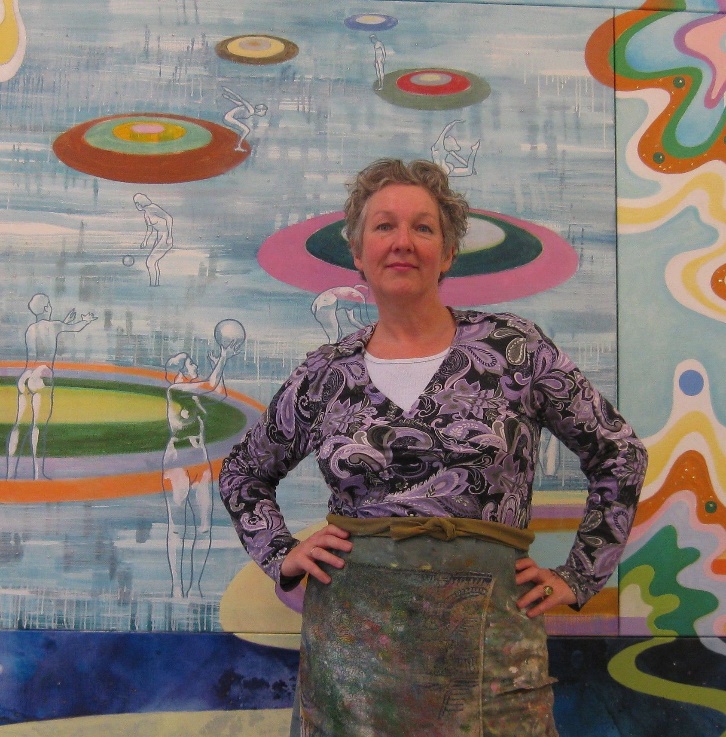
One artist, who gives you about 250 pieces of work full of creativity to experience. Art with themes recognizable to people from different cultures. The paintings and drawings are about common characteristics of human life. Carolina Wajon combines concrete working styles with abstract working styles, creating a colorful, timeless world.
Carolina Wajon (1959} was born in Alkmaar in the Nederlands and grew up in Breda. As a child and young adult, she loved to play the recorder. She really enjoyed drawing. She hesitated to go to the conservatory or art academy and first completed a bachelor's degree in psychology at Radboud University in Nijmegen.
She got depressed and restarted being creative by drawing, working with paper and paint. She has completed a first-grade art teacher education at art academy Artez in the city of Arnhem, the Netherlands. After a short period being an art teacher in secondary education, she started giving lessons in her own studio. At times she saw 40 students a week.
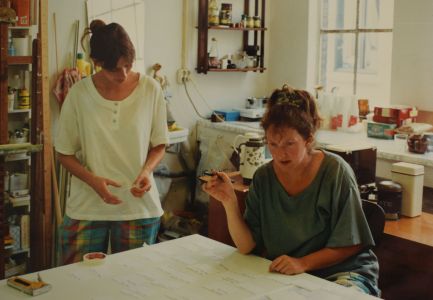
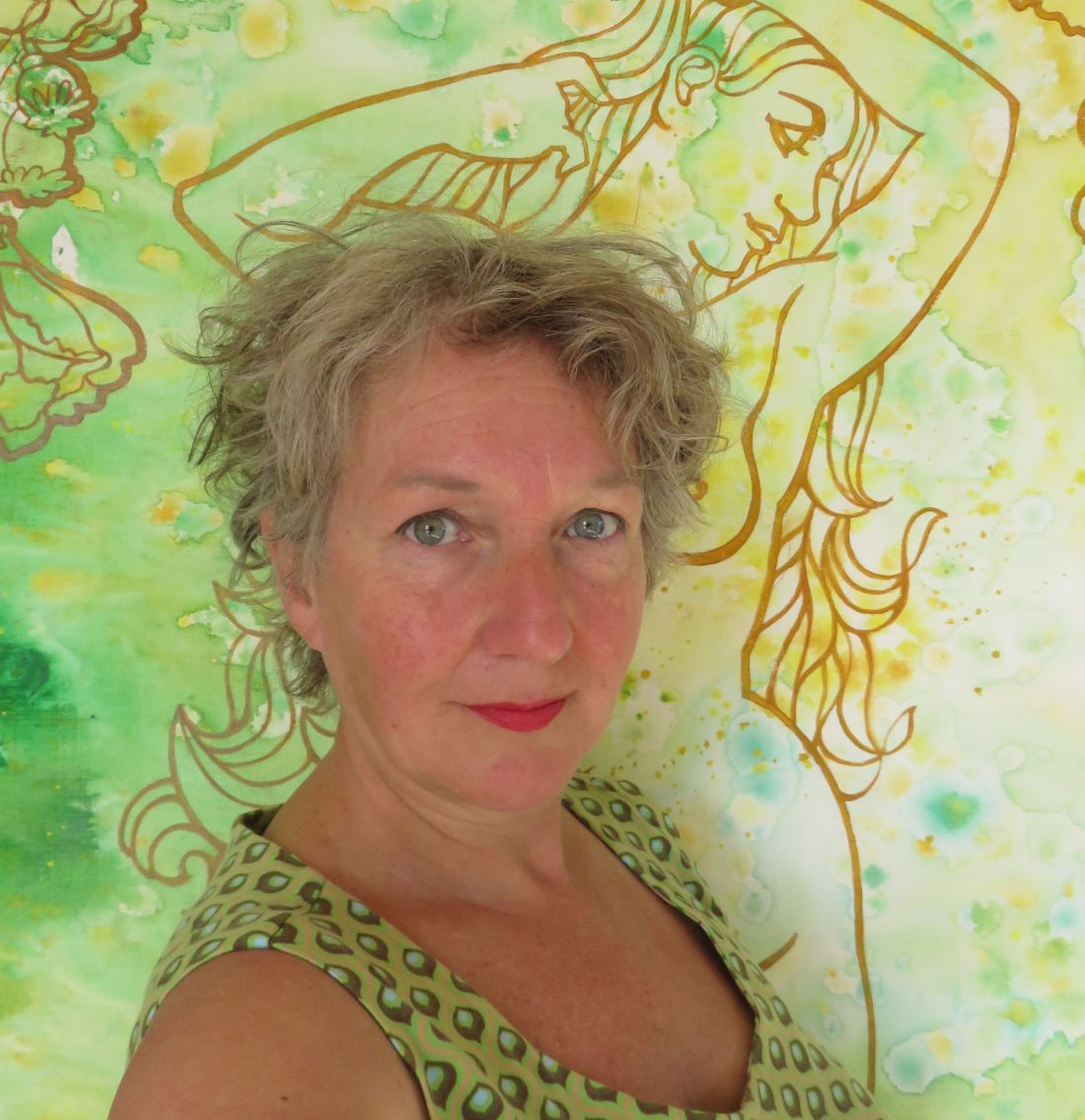
She has taught many people for more than 25 years. Since 2013 she has stopped her teaching activities and works full-time as an artist on various art collections. In these projects, she combines her educational and artistic talents and skills with her life experience. These art collections, created in different periods, form one large and coherent whole about all kinds of aspects of being human. This is how "The Garden of Human Nature" is created by time.